
Jacob McHenry · CFI · CFII · KBFL Meadows Field
Instrument Rating Training in Bakersfield, CA
Fly by reference to instruments with a CFII who has given over 5,000 hours of dual instruction in 16 years of teaching.
Why get an instrument rating?
An instrument rating lets you fly in clouds and low visibility under instrument flight rules (IFR), and it makes you a more precise, more capable pilot even on a clear day. Weather can limit what a visual-only pilot can do. With an instrument rating, you can often fly when a VFR pilot would be grounded, as long as you stay proficient and make good decisions. It also is a prerequisite for much of the commercial pilot path.
Jacob is a CFII
Jacob holds the instrument instructor (CFII) certificate along with a commercial pilot certificate with an instrument rating, and teaches instrument students under 14 CFR Part 61 at KBFL Meadows Field in Bakersfield. His 16 years of teaching and more than 5,000 hours of dual instruction given include instruction in instrument flying.
What you will learn
- Attitude instrument flying. Controlling the airplane by reference to the flight instruments.
- Radio and ATC communication. Obtaining and reading back IFR clearances, working with tower, approach and center.
- Navigation. GPS and traditional navigation, airways, holding patterns and intercepting and tracking courses.
- Instrument approaches. Precision and non-precision approaches, including ILS, RNAV (GPS), localizer and VOR procedures.
- Weather and decision-making. Reading forecasts, understanding icing, thunderstorms and fog, and deciding when not to go.
- Emergency procedures. Instrument failures, lost communications and other abnormal situations.
FAA requirements in brief
Under 14 CFR 61.65, instrument rating applicants generally need a private pilot certificate, a passing score on the instrument knowledge test and a passing practical test (the checkride). The experience requirements include 50 hours of cross-country flight time as pilot in command, 40 hours of actual or simulated instrument time with at least 15 hours of instrument training from an authorized instructor, instrument training within two calendar months before the test and a long cross-country flight under IFR with approaches. See the regulation and the instrument rating Airman Certification Standards for the full list.
Modern avionics and instrument training
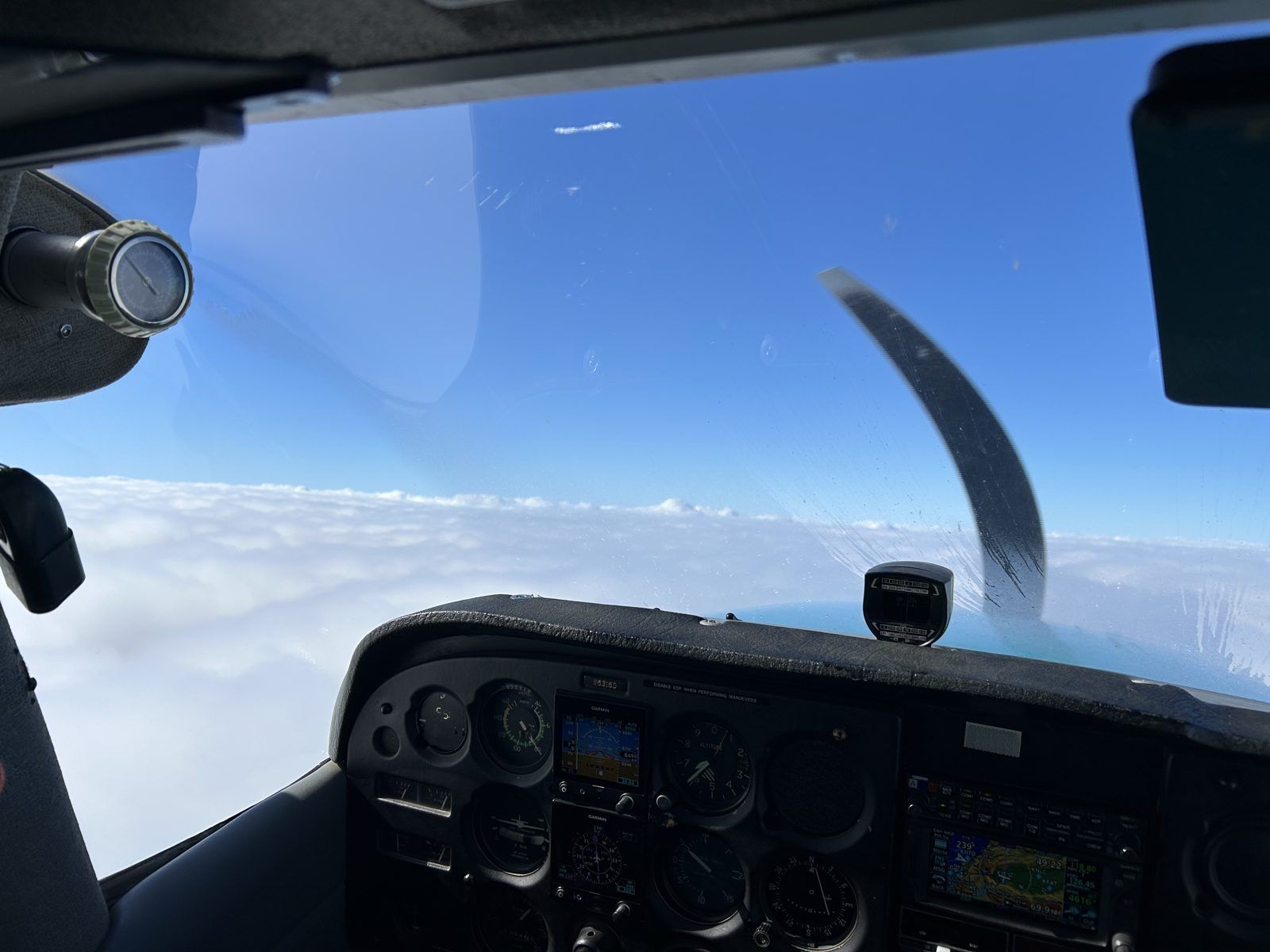
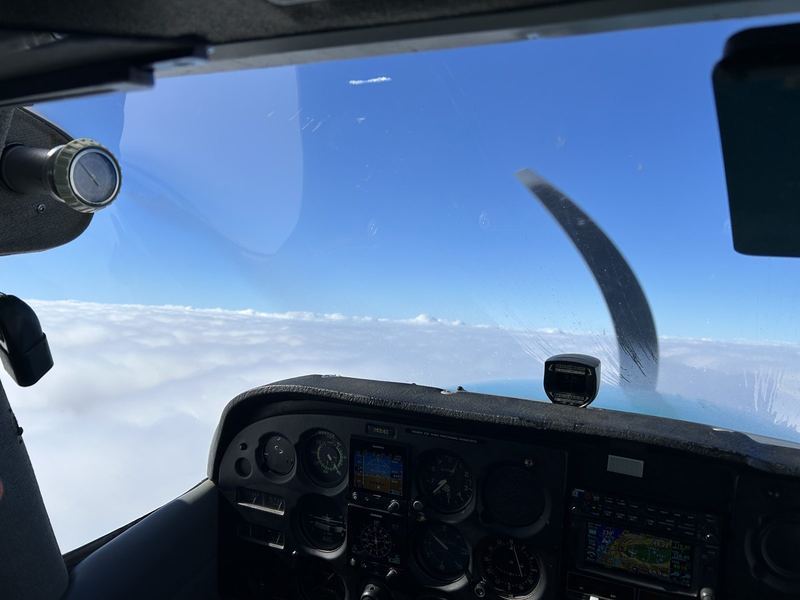
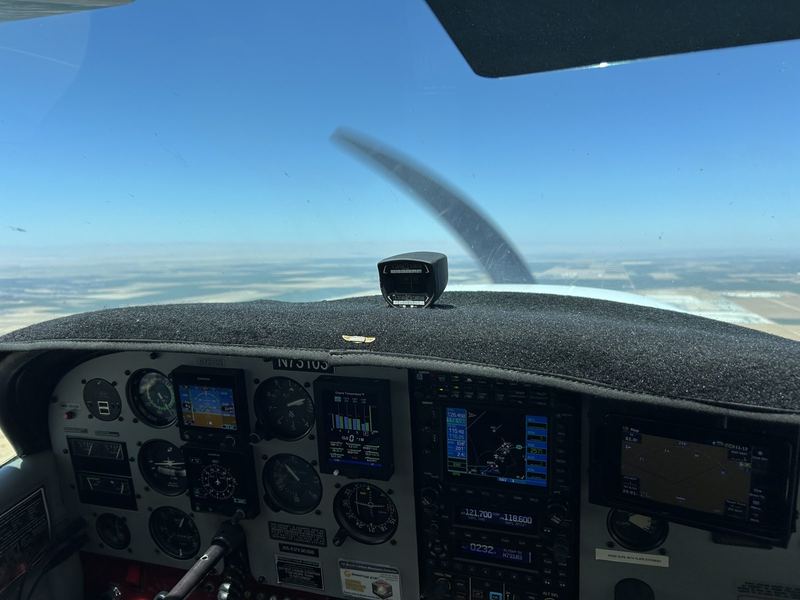
Many training airplanes now include glass or digital instruments, GPS navigators and autopilots. Learning how to use the equipment in your airplane, and how to fly without it, is part of good instrument training. Megahertz Sky Hub lists airplanes with Garmin avionics such as the GTN 650 GPS, G5 electronic instruments and GFC 500 autopilot. Check their site for what each airplane has, and see the aircraft resources page for manuals.
Weather in the Central Valley
Bakersfield and the southern San Joaquin Valley see seasonal weather that is a good teaching tool for instrument flying, including winter fog and low clouds. Instrument training is about learning to evaluate conditions, fly the procedures precisely and make conservative go/no-go decisions.
Cost and aircraft
Instrument training involves airplane time, instruction time and sometimes time in a flight training device or simulator. Airplane rental is available from Megahertz Sky Hub, which currently lists rental at $172 per hour wet; confirm directly. The airplane has to be properly equipped and current for IFR flight. Flight instruction is $70 per hour, separate from airplane rental.
Frequently asked questions
What are the requirements for an instrument rating?
Can I train for an instrument rating with a private pilot certificate only?
How long does instrument training take?
Airplane rental & avionics
Rent the airplane from Megahertz Sky Hub
Flight instruction is $70 per hour, separate from airplane rental. I teach as an independent CFI, and I work with Megahertz Sky Hub, the shop at KBFL that rents airplanes and also offers avionics services. Their rental fleet at Meadows Field (KBFL) includes a Cessna 172N (N6316D) and a Piper Cherokee PA-28-140 (N500KC), and their website currently lists rental at $172 per hour wet (fuel included). Rates and availability change, so confirm directly with the shop before you book.
(661) 393-1818
(661) 703-1266
mhzskyhub.com
Ready to start flying?
Tell me your goals and where you are in your training, and I'll reply to set up your first lesson.